
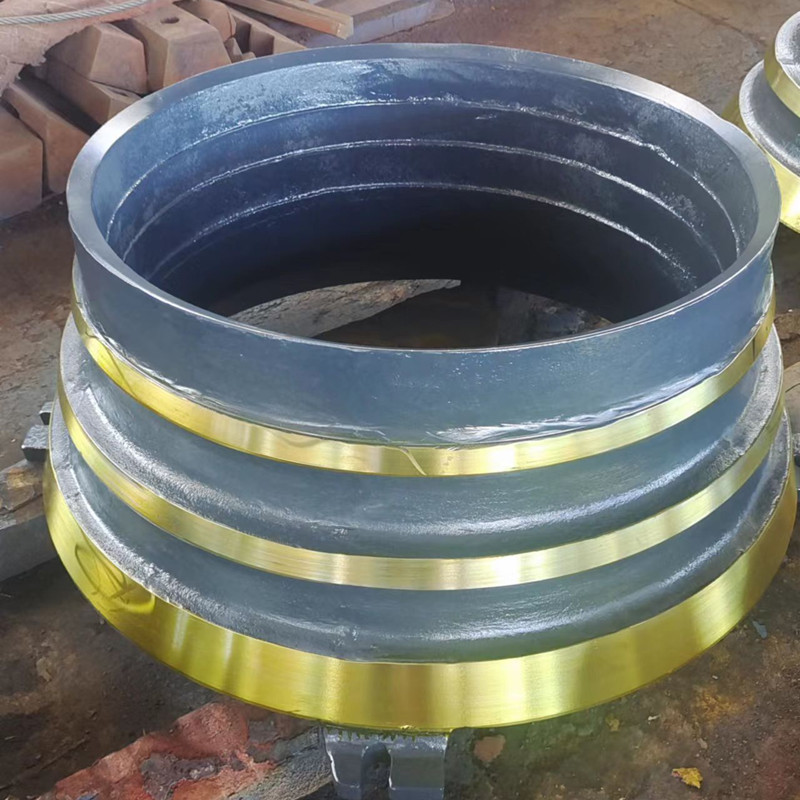
In the ever-evolving mining and mineral processing industry, the efficiency and durability of equipment like SAG (Semi-Autogenous Grinding) mills are critical to operational success and cost management. Wear parts for SAG mills are subjected to severe abrasive conditions, making the choice of materials and design fundamental to the longevity and performance of the equipment. Recognizing this demand, a prominent company specializing in SAG mill parts has been advancing its product offerings by combining high-quality materials with tailored solutions designed to extend service life significantly.
### Advancing SAG Mill Wear Solutions with Superior Materials
SAG mills require robust wear parts capable of withstanding constant impact and abrasive forces while maintaining structural integrity. The company under review has established a reputation for providing comprehensive wear solutions by utilizing a broad spectrum of materials tailored to meet industry challenges.
Among the core materials offered are:
- **Standard Manganese Steel (Mn Steel):** Known for its exceptional toughness and work-hardening capabilities, manganese steel is a traditional choice for SAG mill liners and grinding media. Its ability to absorb impact and resist abrasion makes it a reliable base material in heavy-duty milling applications.
- **High Chromium Iron (Hi-Cr Iron):** High chromium iron alloys provide enhanced wear resistance through their hardness and corrosion resistance, offering improved lifespan over conventional cast irons.
- **Alloy Steel:** Offering a balance of strength and toughness, alloy steel parts are designed for specialized applications where additional mechanical properties are required.
- **Carbon Steel:** Utilized in less demanding applications or as a supporting structural element, carbon steel provides cost efficiency while maintaining reasonable durability.
Beyond these conventional materials, the company has innovated by incorporating specialty alloys and composites to address the limitations of standard components.
### Tailored Wearing Solutions for Extended Life Cycle
The company recognizes that no single material suits all operational environments. Therefore, customization plays a pivotal role in their product development strategy. By evaluating specific mining conditions, mill design, and operational parameters, the company offers tailored wearing solutions that address unique challenges faced by customers.
Some of the cutting-edge solutions include:
- **Titanium Carbide (TiC) Inserted Alloys:** TiC is known for its high hardness and wear resistance—unmatched by many traditional materials. Integrating TiC inserts within liners and liners components substantially improves resistance to abrasion and erosion, considerably extending the life span of wear parts.
- **Ceramic Inserted Alloys:** Ceramics possess superior hardness and chemical inertness, making them ideal for highly abrasive grinding processes. The company’s ceramic-inserted solutions are designed to minimize wear and reduce downtime associated with part replacements.
- **Chromium Inserted Alloys:** Chromium additions improve hardness and corrosion resistance. Alloy components with chromium inserts are especially effective in environments where corrosive slurries or extreme pH levels challenge the durability of wear parts.
These innovations not only reduce the frequency of parts replacement but also decrease operational interruptions, leading to improved productivity and cost efficiency.
### Commitment to Quality and Customer-Centric Customization
At the heart of the company’s operations is a commitment to quality control and customer satisfaction. Their manufacturing processes involve rigorous testing and adherence to international quality standards, ensuring each wear part meets stringent performance criteria.
Additionally, the company’s engineering team works closely with clients to analyze mill operating conditions and recommend the optimal material combinations and part designs. This client-specific approach ensures that solutions are not only technically sound but also economically viable, considering factors like grinding media composition, ore hardness, and mill size.
### Industry Impact and Future Directions
The company’s dedication to enhancing SAG mill component performance marks a significant contribution to the grinding industry. By offering both standard and highly specialized wear parts, they help mining operations reduce downtime, improve grind efficiency, and manage maintenance costs effectively.
Looking forward, continuous research into new material composites and insert technologies remains a priority. The increasing complexity of ores and the demand for higher throughput drive the need for even more resilient solutions. In this context, the company is exploring advanced ceramic composites, nano-material coatings, and additive manufacturing techniques to push the boundaries of wear resistance and part customization further.
### Conclusion
The challenges posed by the grinding environment in SAG mills require durable and adaptable wear solutions. By leveraging a diverse range of superior materials — from traditional manganese steel to advanced TiC and ceramic inserts — and providing customized designs tailored to operational demands, this company is at the forefront of delivering lasting value to the mining and mineral processing sectors.
Their integrated approach enhances equipment longevity, optimizes mill performance, and ultimately supports the industry’s goal of efficient and sustainable resource extraction. As mining operations face increasing pressures to reduce costs and environmental impacts, innovative wear solutions for SAG mills will continue to play an indispensable role in meeting these objectives.